


Hiển thị các bài đăng có nhãn bitoyo. Hiển thị tất cả bài đăng
Hiển thị các bài đăng có nhãn bitoyo. Hiển thị tất cả bài đăng
Thứ Ba, 22 tháng 1, 2013
Thứ Bảy, 29 tháng 12, 2012
Dinh Huy Vu Blog: MASSAGE & SPA - EDEN SAIGON HOTEL
Dinh Huy Vu Blog: MASSAGE & SPA - EDEN SAIGON HOTEL: PERSONALISED BODY MASSAGE Your massage will be designed according to your individual needs, addressing any areas of tightness, stre...
| |
0
comments


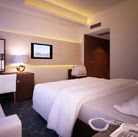
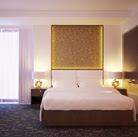
MASSAGE & SPA - EDEN SAIGON HOTEL
PERSONALISED BODY MASSAGE
Your massage will be designed according to your individual needs, addressing any areas of tightness, stress or muscle tensions and using a personally chosen aromatheraphy oil. The massage may include a combination of Swedish, aromatheraphy, deep muscle massage, lymphatic drainage or stretching techniques alongside the use of hot stones, if needed, to ease deep tension, muscle stress and strain.
HOT STONE MASSAGE

Our full body massage with hot stones is one of our most popular body treatments. The hot basalt stones will help relieve your aches and pains, and rebalance your chakras, while your therapist expertly massages to further relax and release deep tension. The stones deeply warm your muscles and stimulate circulation - hot stones also help to alleviate body aches, insomnia, stress, anxiety and can help relieve
arthritic pain.
FOOT MASSAGE
This indulgent foot treatment includes a foot soak and a gentle exfoliation of the feet, followed by a relaxing reflex point foot massage to restore energy throughout the body, reducing fluid in the lower legs and leaving you feeling completely refreshed.
PERSONALIZED FACIAL

During one of our most popular facials, your therapist will adapt the treatment to suit your skin’s specific needs. This customized facial includes deep cleansing, exfoliation, steam and gentle extraction where needed, followed by a deeply relaxing massage and specialized mask. SPA skincare, including booster serums, eye complexes and moisturizers, is chosen to achieve optimal results for your skin type. Your therapist will also give you skincare advice along with personally prescribed products to address your skincare concerns. Take your products home to enjoy that fresh facial feeling every day.
Link: http://www.edensaigonhotel.com/en/services/17/massage--spa-.html
| |
1 comments
Thứ Tư, 24 tháng 10, 2012
Sweet Options for the iPhone 5
The accessory market is being flooded with cases for the iPhone 5 as manufacturers rush to provide options for the latest Apple smartphone. But few companies have done much more than resize old cases.
Speck, based in Palo Alto, Calif., has taken a more thoughtful approach, tweaking the design of its CandyShell cases to make them thinner and give them a better grip.
Speck was recently awarded a patent for its CandyShell design, which combines a hard, glossy exterior with a soft, rubbery interior in a single piece. A raised bezel offers a modest amount of screen protection when the phone is placed face down, and rubberized tabs cover the buttons.
I’ve always been partial to the CandyShell Flip because the bottom third of the case flips back for easy docking. I hate wrestling with cellphone covers to get them on and off. But when I heard about the redesign for the CandyShell Grip, I thought I would give it a try because I can be rather clumsy when it comes to holding my phone.
The CandyShell Grip now has rubber ridges woven into the plastic on the back, and the finger pads on the front were removed. The redesign makes the case easier to hold securely, which is especially handy when playing games on the phone. But I found that the grips also make it harder to slide the phone in and out of your pocket, so it’s a bit of a trade-off.
The CandyShell cases, which cost $35, come in a variety of colors and designs, some commemorating holidays, flags, countries and even bridges. (Please, Speck, make a Brooklyn Bridge case!) The cases are relatively expensive, but they offer decent protection without adding much bulk. And the good thing about having so many options is that when you get tired of one case, you can easily switch to another.
Source: Nytimes
| |
0
comments
Thứ Tư, 12 tháng 9, 2012
The iPhone 5: My First Impressions
David Pogue
Apple unveiled the new iPhone 5 today in San Francisco. As it turns out, most of the individual rumors about it were true — but even so, they didn’t describe the whole package.
The new phone is the same width as the old one, but taller and thinner, as though someone ran over the old iPhone with a steamroller. When held horizontally, the four-inch screen has 16:9 proportions, a perfect fit for HDTV shows and a better fit for movies. The added screen length gives the Home screen room for a fifth row of icons.
The band around the edges is still silver on the white iPhone — but on the black model, it’s black with a gleaming, reflective bezel. It looks awesome.
The back is aluminum now. The strips at the top and bottom of the back are made of glass, the better to allow the wireless signal through — but as a side benefit, you can now tell which way is front as you fish the thing out of your pocket.
The processor, with a new design, is twice as fast, according to Apple. And the iPhone has 4G LTE, meaning superfast Internet in select cities.
Not many rumor mills predicted the improvement in the camera. It’s an eight-megapixel model with an f/2.4 aperture, meaning that it lets in a lot of light. The panorama mode is the best you’ve ever seen: as you swing the camera in an arc in front of you, a preview screen shows you the resulting panorama growing in real time. I took only two panorama shots in my limited time with the iPhone 5, but they came out crazy good.
The camera takes 40 percent less time between shots, it can recognize up to 10 faces (for focus and exposure purposes) and it can take still photos even while you’re filming video.
The new phone also offers better battery life (eight hours of talk time or Web browsing), according to Apple (I haven’t tested it yet). It also has noise cancellation both for outgoing and incoming sound. The phone is also ready for wideband audio — your callers won’t have that tinny phone sound, but richer, more FM-radioish sound — but that requires the carrier to upgrade its network. The catch: no American carriers have announced plans to do that.
At first glance, there’s really only one cause for pause: Apple has replaced the 30-pin charging/syncing connector that’s been on every iPhone, iPad and iPod since 2003. According to Apple, it’s simply too big for its new, super-thin, super-packed gadgets.
So with the iPhone and the new iPod models also announced today, Apple is replacing that inch-wide connector with a new, far smaller one it’s calling Lightning.
I’ll grudgingly admit that the Lightning connector is a great design: it clicks nicely into place, but it can be yanked out quickly. It goes in either way — there’s no “right side up,” as there was with the old connector. And it’s tiny, which is Apple’s point.
Still, think of all those charging cables, docks, chargers, car adapters, hotel-room alarm clocks, speakers and accessories—hundreds of millions of gadgets that will no longer fit the iPhone.
Apple will sell two adapters, a simple plug adapter for $30 or one with a six-inch cable for $40, to accommodate accessories that can’t handle the plug adapter.
That’s way, way too expensive. These adapters should not be a profit center for Apple; they should be a gesture of kindness to those of us who’ve bought accessories based on the old connector. There’s going to be a lot of grumpiness in iPhoneland, starting with me.
Overall, though, Apple seems to have put its focus on the important things you want in an app phone: size, shape, materials, sound quality, camera quality and speed (both operational and Internet data), and that’s good. I’ll have a full review once I’ve had some time to test the thing.
The new iPhone goes on sale on Sept. 21 for $200 with a two-year contract from Verizon, Sprint or AT&T. (That’s the 16-gigabyte model. You can get 32 gigs for $300 or 64 gigs for $400.)
If you’re content with last year’s technology — or 2010’s — you can also get the iPhone 4 free with a two-year contract, or the iPhone 4S (16 gigs) for $100 with contract.
The holiday shopping season has begun.
Source: The New York time
| |
0
comments
Thứ Tư, 5 tháng 9, 2012
When to Go to Vietnam
.jpg)
Think Vietnam and you might imagine a steamy jungle and hot sun -- and you'd be mostly right. But even though Vietnam is tropical, you'll find a real range, from chilly mountaintops and cool highland areas to sun-drenched coastline and, yes, that steamy jungle, too, laced with the swampy rivers you've seen in movies.
Opposing monsoon seasons in the north and south mean that seasonal changes are different in north, central, and south Vietnam. The good news for travelers is that this means it's always high season somewhere in Vietnam, and the tropical south is always warm. Vietnam can be broken into three distinct geographical and climatic zones as follows: north, central, and south.

The north is cooler than the rest of the country. Winter months, from November until January, can be quite cool, especially in mountainous areas. Northern temperatures range from 60°F to 90°F (16dg]C-32°C). If you are going far north to Sapa or Dien Bien Phu along the China/Laos border, be sure to bring one extra layer of warmth (a pullover will do); near Sapa is Fansipan, Vietnam's highest point, and there is even the occasional freeze and snow at this altitude. Hanoi beaches off Haiphong or Vinh). The best time to visit the north, though cold in midwinter, is from November to the end of April.
The Central Coast follows an opposing monsoon pattern to the north, with warmer weather during the July-to-October high season on, and wet, colder weather from November to May. Coastal Vietnam -- Quy Nhon and Nha Trang -- experiences steamy temperatures like the far south (70°F-90°F/21°C-32°C), but coastal wind can have a cooling effect. Raging storms and frequently large typhoons strike the coast in summer months, from July to November; often during this season, the surf is too rough for swimming.
The Central Highlands, just inland and on the southern end of theAnnamese Cordillera range, receives nearly double the rainfall of the national average, and this plateau, in towns like Dalat andPleiku, is cool throughout the year.

The south, the region around Ho Chi Minh City and the Mekong Delta, is steamy hot year-round with only periods of rainy and dry weather. Temperatures range from 70°F to 90°F (21°C-32°C), with a hot, dry period from March to May seeing temperatures in the 90s (30s Celsius). Summers are hot, humid, and rainy.
Because of the regional variations in weather, a part of the country is seasonable at any time of year. Most travelers in Vietnam trace a north-south or south-north route with flights connecting on either end (or adding continued travel to Cambodia or China ). Depending on the duration of your stay, you can plan to "follow" the good weather, hitting Saigon in February or March and tracing warmer weather up the coast.
Note: Avoid travel during the Tet holiday in January and February. Tet is a Christmas and New Year's celebration rolled into one, and anyone and everyone is going "over the river and through the woods" to their respective grandmother's house. Transport is always fully booked. Unless you're lucky enough to enjoy Tet with a Vietnamese family, be forewarned: During this time, many travelers find themselves stranded, hotels completely full, and roadways crowded with traffic and revelers.
Source: The NewYork Times
| |
0
comments
Thứ Hai, 4 tháng 6, 2012
Hotel in Vietnam
|

|
------------------------------
Check us on:
 -
-  -
-  -
-  -
-  -
- 
------------------------------
Contact information:
Add: 38 Bui Thi Xuan Str., Ben Thanh Ward, Dist. 1, Ho Chi Minh City, Vietnam
Tel: (+84-8) 6298 8388 - 6257 1818 - Fax: (84-08) 62913309
Email: info@edensaigonhotel.
------------------------------
| |
0
comments
Thứ Sáu, 1 tháng 6, 2012
Where the Faithful Worship Among the Tourists

Jeffrey Lau for The New York Times
Rows of Cao Dai believers bowed in prayer.


Vo Huu Nghia, a worshiper.
Removing his sandals and smoothing down his robes, Vo Huu Nghia, 60, who had befriended me that day last year, joined them. He silently entered the cavernous temple and, finding a spot, knelt down and began to chant his prayers. Above him were the serene faces of Jesus, Confucius and Buddha, while a giant all-seeing eye stared down at the few hundred worshipers.
“We are Vietnamese, this is our religion,” Mr. Vo told me later in halting English.
For 70 years this elaborate, dragon-adorned temple outside the small city of Tay Ninh, about 60 miles northwest of Ho Chi Minh City (formerly Saigon) near the Cambodian border, has been the center of Cao Dai, which has five million adherents. While it is not the country’s dominant religion, it has the distinction of being its largest homegrown one.
Every year tens of thousands of visitors, pilgrims and tourists, visit the temple to worship or simply to gaze in awe at its vaulted ceilings, vibrant color schemes and praying masses. And then there’s its unusual collection of saints, prophets and religious iconography, which in range, kitsch and spectacle presents an impressive cross-section of religious and aesthetic styles. But that’s befitting a religion that aims to unite all of humanity through the common vision of an individual creator — the same God honored by most major religions. The protagonist of Graham Greene’s “Quiet American” (1955) described the temple like this: “Christ and Buddha looking down from the roof of a cathedral on a Walt Disney Fantasia of the East, dragons and snakes in Technicolor.”
I had been drawn to the temple after coming across a list of Cao Dai (pronounced gao-DIE) saints that included Joan of Arc, Thomas Jefferson, Sun Yat-sen (the revolutionary father of Chinese republicanism) and Victor Hugo. This diverse group was apparently drawn from those spirits who reached out to Cao Dai priests during séances to impart wisdom and guidance. Some, like Victor Hugo, were said to have regularly communicated with the Cao Dai from beyond the grave.
Visitors to the compound today won’t see a séance — the government banned the practice in 1970s — but there is more than enough to thrill and confuse even the most temple-weary tourist.
The compound has two ornate temples, and a pope’s office, in front of which believers subjugate themselves out of reverence for the first, and only, Cao Dai pope, Pham Cong Tac. (He died in 1959 in exile in Cambodia after running afoul of the South Vietnamese government.) The 188-acre grounds include dormitories and kitchens for the hundreds of resident priests, a high school, a hospital, forests and a large area for religious processions.
I decided to forgo the $6 daily tour buses from Ho Chi Minh City for a three-hour trip by crowded public transport to the nearby town, a journey that still afforded a view of the city’s vast sprawl giving way to miles upon miles of paddy fields. Tay Ninh is in a tropical, agricultural area, and besides the Cao Dai temple and the nearby Cu Chi tunnel system left over from the Vietnam War, there is little to draw tourists.
Checking into the nearest hotel in the small, ramshackle town that has grown around the outskirts of the temple complex, I quickly headed out for what would be the first of many Cao Dai services, which are held every six hours throughout the day and night.
Inside the main temple, worshipers and priests were already bowed, their heads planted firmly on the cool stone floor as they chanted words of praise, accompanied by a single drumbeat and a few stringed instruments.
Closest to the Divine Eye above the altar, several priests in bright red, yellow and blue robes adorned with a large eye and with elaborate headdresses led the worship. On the balconies above, foreign and Vietnamese tourists watched in silence, a concession made by the temple priests, who allow tour groups in exchange for much-needed dollars. (Every day, about a half-dozen busloads of visitors come to see the noon service before heading to the Cu Chi tunnels and then back to the city.)
Thirty minutes after the chanting had begun, it was over, and with that the worshipers stood up and quietly filed out. The priests and student priests remained, enjoying the cool temple air rather than braving the outdoor heat; some went to their rooms to rest.
Soon the tourists were gone too, and the only people left beside me were a handful of sun-worn priests occupying the temple, constructed to be the center of a holy land for a religion created from the vision of a civil servant in 1919.

Today’s striking multicolor, dragon-adorned temple was built from 1933 to 1955, and in architectural terms, is part church, part pagoda, crammed with ornate drums and gongs, haloed statues of saints and other holy figures, and lavish and colorful symbols of other religions. There’s also a sphere depicting the all-seeing Divine Eye — Cao Dai’s offering to the religious cornucopia.
Beyond the four daily services there is little for visitors to the temple complex to do but wander the well-kept grounds, talk to — or simply smile at — the priests and practitioners, and seek shelter from the scorching heat in one of the airy temple buildings. Despite this, I found that the hours drifted by in peaceful contemplation.
I also struck up conversations with a few of the faithful, aided by a translator. Most of the worshipers and temple leaders were long past retirement age, perhaps a sign of the decline of the religion or simply a natural byproduct of people raising families and working. It also seemed to be an egalitarian faith, with just as many of the priests and student priests older women.
“I was born into the faith but had a family life and raised six children,” said Ho Huong Pham, 82, a student priest. “When my husband died 20 years ago, my children were grown up and I came here to devote myself to the faith.”
On the final morning of my two-day stay in Tay Ninh — during which I had left the complex only to eat nearby street food or sleep — I was invited to drink tea with one of the temple’s bishops. A quiet, elderly man, he smiled and explained to me the importance of the various robes (yellow represents Buddhism, blue Taoism and red Confucianism). After a while we sat in silence until it was time for him to put on his yellow ceremonial robes to lead the midday service. As I got up to leave he shook my hand and invited me to come back, before slowly making his way toward the temple a hundred yards away.
On the cramped, un-air-conditioned bus that took me out of town, I remembered a conversation with a man at the temple worshiping with his granddaughter. “Cao Dai is a collection of the best parts of many religions,” the man, Huynh Van Hgoat, 53, had told me.
Despite this, he was doubtful about the future of the religion.
“Ninety percent of believers live in the Mekong,” he said. “Of course I hope the religion is growing, but I doubt it. One day there might be only tourists here.”
A History of Cao Dai

In 1919, Ngo Van Chieu, a lowly Vietnamese civil servant working for the French colonial administration, received a vision of God and, following the heavenly message, began preaching a credo based on the unity of world religions. According to his new doctrine this would be the third alliance between god and mankind, the first coming at the time of the founding of Judaism and Hinduism, and the second around the time that Christianity, Buddhism, Confucianism and Taoism began. Cao Dai would be the third and final alliance, the religion that would unite and prove the unified message of all of these earlier religions.
The new religion followed the Buddhist cycle of reincarnation, drew upon the ethical precepts of Confucianism, had an ecclesiastical hierarchy similar to that of the Roman Catholic church and yet preached the Taoist concept of yin-yang, of two balancing forces, good and bad.
Cao Dai spread quickly through Vietnam, and by the 1950s it was such a force that it was said to command an army of 25,000 in the Mekong region during the turbulent and uncertain days at the end of the French occupation and claim an eighth of the country’s population as believers.
This rapid growth wouldn’t last. After the Vietnam War — during which Cao Dai priests refused to side with the Vietcong, even after their military had been subdued by the South and their pope exiled — the religion had all of its land confiscated. The land around the temple was returned in 1985.
Source: The New York Times
| |
0
comments
Thứ Tư, 30 tháng 5, 2012
Ba Danh pagoda

Ba Danh Pagoda, also called Bao Son pagoda, located in Danh village, Ngoc Son commune, Kim Bang district.
Like other pagodas, Ba Danh pagoda was built to worship Buddha. However, besides the statue of Bo Tat (Bodhisattva), there are also the statues of Thai Thuong Lao Quan, Nam Tao (a constellation in the northern hemisphere), Bac Dau and the statues of Tu Phu belief (Four Dharmas), a popular belief of Viet Nam. The statues of Tu Phu belief appear here because the pagoda is a place to worship Tu Phap. The legend of Tu Phap, including four mothers "May" (Cloud Dharma), "Mua" (Rain Dharma), "Sam" (Thunder Dharma) and "Chop" (Lightning Dharma), is the mixture of Buddhism and local popular beliefs, which were written in Man Nuong story by Linh Nam Chinh Quai (Tran The Phap, 19th century, Vu Quynh - Kieu Phu, 1492).

The legend that Tu Phap was originated in Man Nuong Buddha spread throughout the north plain areas, and has been handed down here. In the past, Kim Bang people believed that Bac Ninh people met good weather and crops because they worshiped Tu Phap, therefore, they went to Bac Ninh to ask for the rests of burned incense. In the beginning, Tu Phap was worshipped in the village of Van Lam, Dang Xa, Van Chau, Bau Thon, Bai Le and then this custom has spread to other communes in Ha Nam of Day riverside.
People in Danh village also intended to ask for incense bases. The legend has it that there were heavy rain and strong wind here that damaged crops. One day, an old man had a dream that a beautiful girl with kind face, bright eyes and forehead talked to him that she was appointed to take care of local people, and then she showed him where they should build the pagoda. At that time, that land was only a dense wood with lots of century-old trees and birds.
At first the pagoda was built out of bamboo. In the year of Vinh Tri, Le Hy Tong's reign, the forest was cleared to rebuild the pagoda. Local people were not allowed to build house there, therefore the scenery has been more and more solemn and deserted. Right after building the pagoda, an ancient jack tree was fallen and a strange person who had the same dream as the old man took its wood to sculpt a statue. In flood season of that year, when the flood-water level rose high, there was a wooden throne washed aside onto the river shore and didn't drift downstream. Strangely, the statue fitted on the throne. Since that time, local people have met good weather and abundant crops. The supernatural power of Thanh Ba Bao Son (Bao Son's Holy Mother) attracts the tourists from many areas. And helmsmen going through this area on flood season always burn incense in this pagoda to pray for safety.
Both this legend and the legend about Man Nuong have the same detail of drifting wood, and the two Genies in these two legends are Agriculture Nymph. Moreover, the legend of Ba Danh reflects the customs of people living along Day riverside to worship the Water Genie.
The pagoda faces to the south and is bordered by the road, and the three-door temple gate near the riverside. This work was built five steps higher, and its two sides were built in. The three-door temple gate is divided into three sections and two storeys: the upstairs is a campanile with two tile layers and a fence of pales, doors of three lower sections were made of iron wood. There are two bronze pillars outside the door, and two dragons looking back at each other on the top of three-door temple gate. Beside the main gate, there are two small gates with eight doors used on weekdays. The main entrance only opens on major holidays.
In the regions there are a flower garden, a tiled yard and two corridors. The forecourt and the sanctum have five sections with two built-in sides and tiled roof. They are connected by "Cua duc ban". "Thuong dien" (the central temple) has three compartments with walls on the two sides and iron-wood door in front. The interior of the central temple is smaller but higher than that of the forecourt and the sanctum. To the west of the pagoda is a five-compartment house, its three middle ones are used to worship the last nuns, and the rest for monks. To the west is the palace to worship the Natural Mother that is next to the sanctum. The pagoda is encompassed by brick walls.
Ba Danh pagoda is the system of nearly 40 compartments. It was built a long time ago, and has been restored many times. But the other works have been built since the 19th century.
Ba Danh pagoda has long been referred to as a divine, secluded pagoda with picturesque scenery, which is a rare ancient and close beauty in Ha Nam province.

The legend that Tu Phap was originated in Man Nuong Buddha spread throughout the north plain areas, and has been handed down here. In the past, Kim Bang people believed that Bac Ninh people met good weather and crops because they worshiped Tu Phap, therefore, they went to Bac Ninh to ask for the rests of burned incense. In the beginning, Tu Phap was worshipped in the village of Van Lam, Dang Xa, Van Chau, Bau Thon, Bai Le and then this custom has spread to other communes in Ha Nam of Day riverside.
People in Danh village also intended to ask for incense bases. The legend has it that there were heavy rain and strong wind here that damaged crops. One day, an old man had a dream that a beautiful girl with kind face, bright eyes and forehead talked to him that she was appointed to take care of local people, and then she showed him where they should build the pagoda. At that time, that land was only a dense wood with lots of century-old trees and birds.
At first the pagoda was built out of bamboo. In the year of Vinh Tri, Le Hy Tong's reign, the forest was cleared to rebuild the pagoda. Local people were not allowed to build house there, therefore the scenery has been more and more solemn and deserted. Right after building the pagoda, an ancient jack tree was fallen and a strange person who had the same dream as the old man took its wood to sculpt a statue. In flood season of that year, when the flood-water level rose high, there was a wooden throne washed aside onto the river shore and didn't drift downstream. Strangely, the statue fitted on the throne. Since that time, local people have met good weather and abundant crops. The supernatural power of Thanh Ba Bao Son (Bao Son's Holy Mother) attracts the tourists from many areas. And helmsmen going through this area on flood season always burn incense in this pagoda to pray for safety.
Both this legend and the legend about Man Nuong have the same detail of drifting wood, and the two Genies in these two legends are Agriculture Nymph. Moreover, the legend of Ba Danh reflects the customs of people living along Day riverside to worship the Water Genie.
The pagoda faces to the south and is bordered by the road, and the three-door temple gate near the riverside. This work was built five steps higher, and its two sides were built in. The three-door temple gate is divided into three sections and two storeys: the upstairs is a campanile with two tile layers and a fence of pales, doors of three lower sections were made of iron wood. There are two bronze pillars outside the door, and two dragons looking back at each other on the top of three-door temple gate. Beside the main gate, there are two small gates with eight doors used on weekdays. The main entrance only opens on major holidays.
In the regions there are a flower garden, a tiled yard and two corridors. The forecourt and the sanctum have five sections with two built-in sides and tiled roof. They are connected by "Cua duc ban". "Thuong dien" (the central temple) has three compartments with walls on the two sides and iron-wood door in front. The interior of the central temple is smaller but higher than that of the forecourt and the sanctum. To the west of the pagoda is a five-compartment house, its three middle ones are used to worship the last nuns, and the rest for monks. To the west is the palace to worship the Natural Mother that is next to the sanctum. The pagoda is encompassed by brick walls.
Ba Danh pagoda is the system of nearly 40 compartments. It was built a long time ago, and has been restored many times. But the other works have been built since the 19th century.
Ba Danh pagoda has long been referred to as a divine, secluded pagoda with picturesque scenery, which is a rare ancient and close beauty in Ha Nam province.

In the center of the ironwood screen in the lower floor of the pagoda' three entrance gate, there is an engraver of five blessings (5 bats holding longevity letter in their mouths). On every pillar emerging from the 2 side walls, the ancient artists have sculpted four noble animals: dragon, unicorn, tortoise, and phoenix in lissome and symmetric position. On the roof of the gate, two dragons attending upon the moon were cast with lime, sand, and porcelain representing the dragon modeling style of the Nguyen dynasty. Notably, there are two stone dragons and two tigers symmetry locating along the two side stairways attending upon the service house. In comparison with the two dragons on the roof of the gate, the two stone dragons inside the gate are sculpted in a simpler manner and look gentler and slightly resemble the snake rather than varan. Similarly, the two tigers slanting 450 behind are also sculpted in a simple way which makes it look gentler than tigers carved in other regions. These are rare relics of important folklore value to be preserved.
Merely all the architecture and sculpture art of the pagoda are exhibited in the service house, the place where the Buddhist monks service everyday. The house consists of five rooms. The entire frame is made of ironwood. Two tipped gables are modeled with dragons. Standing in the middle of the yard, visitors can have their sense thrilled by the statue of 4 dragons attending upon the moon on the roof of the service house. The four dragons are in lissome position, with their vivid but fierce eyes, whiskers, claws; fins seem to be flying in the air, playing with each other. The statue represents characteristics of dragons under Nguyen Dynasty.
At the two ends of the corridors connecting to the service house, there stand 2 imposing pillars. Each pillar is sculpted with 4 noble animals: dragon, unicorn, tortoise, and phoenix in symmetric position, representing sense of harmonization and sustainability. All details of the creatures on the six pillars seem to exhibit meticulously, skillfulness and exquisite talent of the ancient artists.

The first rafter (from the west to the east) lies along the wall, is sculpted with tiger faced design, golden bamboo, roses, peach, and pomegranate. The front side of the second rafter is sculpted with 5 blessings (5 bats), apricot blossoms, roses, Vietnamese 36-cord zither, quill pen, fruit and a gourd of wine. On the backside are 5 dragons fighting over a pearl, roses, orchids and red munia. The front of the third rafter is sculpted with the 4 noble animals (dragon, unicorn, tortoise, and phoenix), pine-tree and horse, apricot blossom and bird. On the crossbeam are Vietnamese 16-chord zither, Vietnamese two-chord guitar. On the back are the 4 noble animals, a gourd of wine and a book. The upper front side of the fourth rafter is sculpted with two dragons attending upon the moon, and on the cross beam are roses, pine tree, coins, musical instrument, and flute. The front of the fifth rafter is sculpted with tiger face, 2 young lions. The crossbeam is sculpted with peaches, citrus fruits, pomegranates, roses, and bat. On the back are the five blessings, peaches, and roses. The sixth rafter has one side against the wall, and on the other side is tiger faced design, dragon-like pine tree, golden bamboo. On the upper part of the cross beam are peach fruit, apricot blossoms, ivory bamboo, grapes, pomegranates, peach and apricot tree, and cloth fan. Apart from the six rafters, there are 4 iron wood pillars, standing between the service house and the central house. The stem of the each pillar is meticulously sculpted with a flying dragon looking to the worship altar in the center of the third room.

The ancient craftsmen usually sculpted creatures on such topics as: The 4 noble animals (dragon, unicorn, tortoise and phoenix); the five blessings (5 bats), 2 dragons attending upon the moon, 5 dragons fighting over a pearl, 4 dragons attending upon the moon, and plants on such topics as: the 4 plants (pine tree, chrysanthemum, ivory bamboo and apricot), bowl of fruits (peach, grapes, pomegranate, fig fruit, Buddha's hand fruit) or such topics on the combination of plants and creatures as: apricot blossom and bird; fir-tree and horse, golden bamboo, dragon-like pine tree… Besides, there are also some familiar topics like Vietnamese musical instruments: 16-chord zither, two-chord guitar, castanets and quill pen, a gourd of wine, fig fruit fan, which are considered to be the 8 valuable things. The ancient artisans have combined topics on symbolic creatures of the royal art (the four noble animals, five blessings, 2 dragons attending upon the moon, 5 dragons fighting over a pearl, apricot blossom and bird, the 4 plants (pine tree, chrysanthemum, ivory bamboo and apricot blossom), pine-tree and horse...) with familiar folklore topics (five fruits, bowl of fruits, folklore musical instruments, flute, two-string violin, castanets). They have also skillfully combined different sculpture methods, dragon-sculpting styles, intaglio to create symbolic but still lively and vivid creatures.
In the top hall of Ba Danh pagoda, there a many Buddha statues, including Tam The (God of past, present and future), the Jade Emperor (the Ruler of Heaven), old man Quan forefather, and Queen Danh statue, among which Queen Danh statue is the center of the pagoda. Queen Danh statue is cast sitting in meditation on a shiny black throne (not on a Buddha's throne) with an indulgent, beautiful face, looking so close but not mystical or in salvation like other Buddha statues. The harmonization of the statue and the throne presents an attraction of the sculpture art of Ba Danh pagoda.
Source: vietcharmtour
| |
0
comments
Thứ Hai, 28 tháng 5, 2012
Buddhism in Vietnam
In theory there are three main religions in Vietnam: Taoism, Confucianism and Buddhism; but in fact there is “tripple religion”, which is an amalgamation of these three doctrines, each of which represents a particular aspect of the whole. And now Buddhism still is main religion in Vietnam.
Buddhism spread first from China to Vietnam's Red River Delta region in approximately the second century A.D., and then from India to the southern Mekong Delta area at some time between the third and the sixth centuries. The Chinese version, Mahayana Buddhism, became the faith of most Vietnamese, whereas the Indian version, Theravada (or Hinayana) Buddhism, was confined mostly to the southern delta region. The doctrinal distinction between the two consists of their differing views of Gautama Buddha: the Mahayana school teaches that Gautama was only one of many "enlightened ones" manifesting the fundamental divine power of the universe; the Theravada school teaches that Gautama was the one-and-only enlightened one and the great teacher, but that he was not divine. The Mahayana sect holds further that laypersons can attain nirvana, whereas the Theravada school believes that only ordained monks and nuns can do so.
 At the 13 century, during the Tran dynasty (1225-1400), the first 3 Kings Trần Thái Tôn, Trần Thánh Tông, Trần Nhân Tông and many high-ranking mandarins and royal members were Zen Buddhists. Among them King Trần Nhân Tông was the most prominent, being the founder of Trúc Lâm Yên Tử Zen School after his retirement from the throne in 1299. The essence of Truc Lam Yen Tu Zen school is to “live the dharma” and Trần Nhân Tông’s life is the illustrated example. Trần Nhân Tông’s Truc Lam Yen Tu Zen School marked the beginning and foundation of Vietnamese Buddhism, which is exemplified by the tenet, “Dharma applied to worldly life,” all of the characteristics of which are outlined in the verse Cư Trần Lạc Đạo. In this interpretation of Buddhism, practicing Buddhism is not limited to ritual activities, worship, and meditation, but right within daily activities. There is no need to search for enlightenment and peace anywhere outside of self and of the environment one lives in.  Vietnamese Buddhism continues to hold this supremacy in our own time. It is therefore easy to understand how great an influence the Buddha has had on the Vietnamese mind, and the generous contribution it has made to the moral and spiritual training of a people whose gentleness and simple outlook on life predisposed them to accept the «Religion of Compassion.»
The presence of the dead, the behaviour of the living, and an influence on the future - the many generations of the Vietnamese family
 Ancestor worship was introduced into Vietnam by the Chinese during their long occupation of the country that began 200 years before the birth of Christ. Since then, it has been fully absorbed into the Vietnamese consciousness and, with Confucianism, underpins the country’s religion and social fabric.
Ancestor worship is not only the adhesive that binds the Vietnamese together, but also one of the most difficult concepts for people from Anglo-Saxon or European origins to understand. It has been said that the Vietnamese believe in the dead, while the Occidentals believe only in death.
How Vietnamese people worship their ancestors
 The practice of ancestor worship is relatively straightforward. Nearly every house, office, and business in Vietnam has a small altar which is used to commune with ancestors. Incense sticks are burned frequently. Offerings are made – fruit, sweets, and gifts. The latter items are paper replicas of dollar notes (‘ghost money’), motorbikes, cars, houses and so on. After worship, the paper gifts are burnt so that the spirits of the gifts can ascend to heaven for the ancestors to use. In the past, the income from a plot of land was used to maintain the altar and arrange the rituals, but this tradition has now faded away. However, the custom that the eldest son will arrange the ceremonial and inherit the family house upon the death of his parents is still generally observed. Another traditional element is the placing of wooden tablets on the altar for each of the ancestors over recent generations. This is less rigorously observed today, and tablets are often replaced by photographs. Some pagodas house commemorative tablets for ancestors on behalf of regular worshippers.  Worshipping takes place regularly on particular days, such as festivals, new and full moon days, the death day of the ancestor, and so on. On important occasions, such as moving house, starting a new business or the birth of a child, and whenever a member of the family needs guidance or a favour, the ancestors are consulted. A proliferation of small fires of burning in the streets of towns and cities means that it is a festival or moon day. One paper fire is likely to be an event affecting a single family. Why Vietnamese people worship their ancestors For the Vietnamese, ancestor worship is not related to ghosts, spiritualism or even the supernatural in the Western sense. It is not even a ‘belief’ in the sense that it is open to question by the ‘believers’. The Vietnamese accept as a fact that their ancestors continue to live in another realm, and that it is the duty of the living to meet their needs. In return, the ancestors give advice and bring good fortune. Devotees of Buddhism believe in previous existences, and seek to correct previous bad deeds to reach enlightenment. Ancestor worship is fundamentally different. For the Vietnamese, death, and the ritual and practice of ancestor worship, constitutes the transfer of power from the tangible life to the intangible. Existence is a continuum stretching through birth, a life spent in tangible form on Earth, followed by death and a spirit existence in another realm for a further two or three generations. The heroic ancestors By virtue of their worthy deeds, heroic ancestors, such as Tran Hung Dao and the Trung sisters, continue to exist and be worshipped in temples for many generations beyond the two or three of ordinary folk. Their rectitude is a model to guide the behaviour of the living. The sins of the parents All ancestors are worthy of respect and reverence, regardless of their behaviour as living beings. However, the misdeeds of a wicked family ancestor will be visited upon his or her children and grandchildren in the form of bad luck. This is a powerful influence upon the behaviour of the living, influencing them to behave well and do good deeds in the present, thereby endowing their living and unborn children with good luck in the future. How ancestor worship affects life in Vietnam The effect of ancestor worship upon Vietnamese society is profound. The concept of life as a small part of an infinitely greater whole embracing the entire race, the notion that the past and present exist simultaneously and that each individual’s behaviour in life has a direct impact upon the quality of the lives of his or her children and grandchildren, extend the concept of the family far beyond the sense in which the term is used in the West. A Vietnamese person is never ‘alone’ – his or her ‘family’ is always present. The future of ancestor worship  Whether ancestor worship will continue to be strong as the influence of scientific rationalism and social change accelerates, is an open question. In the past, the majority of individual family members lived within close geographical proximity. The turmoil in the years before and after the defeat of the US forces led to an exodus of hundreds of thousands of Vietnamese people. More recently, economic migration and travel to far countries to study or work have created a growing diaspora. Only time will determine whether the strength of the beliefs that have sustained the Vietnamese family unit over many centuries, thus creating a unique national community, will withstand the pressures of globalisation and expanding modern technology.
Source: passionvietnamtravel
|
| |
0
comments
Đăng ký


 Bài đăng
Tất cả nhận xét
Bài đăng
Tất cả nhận xét
link
EasyHits4U.com - Your Free Traffic Exchange - 1:1 Exchange Ratio, 5-Tier Referral Program. FREE Advertising!